PORTFOLIO

Published projects and case studies

All 4 of the projects Obelisx has published are documented here as case studies rather than as a logo wall: the problem each one had, what we built, and what changed. Every stack is listed, every site is live, and every address is on the page so you can open it and check the result yourself.

What is in the portfolio?

4 projects, two kinds of work. Sıfır Yedek Parça is the e-commerce build: making a 1.5 million-part catalogue crawlable and searchable. Afa Hukuk, Tek Stedarik and Usta Voltaj are corporate sites, where the real problem in each case was moving a visitor from a service to a conversation in as few steps as possible.

Obelisx has delivered 47+ projects since 2023; these are the ones the clients agreed to publish in full. What you get here is verifiable outcomes rather than invented percentages — the live address is printed on every entry below, so each claim is checkable in one click. The longer write-ups also exist in Turkish, linked under each study.

Projects, categories and technology stacks
ProjectCategoryYearStack
Sıfır Yedek ParçaE-Commerce / Automotive2025Next.js, TypeScript, PostgreSQL, Tailwind CSS, Vercel
Afa Hukuk BürosuCorporate / Law Firm2025Next.js, React, Tailwind CSS
Tek StedarikCorporate / B2B Supply2025Next.js, TypeScript, Tailwind CSS
Usta VoltajCorporate / Electrical & Contracting2025Next.js, React, Tailwind CSS
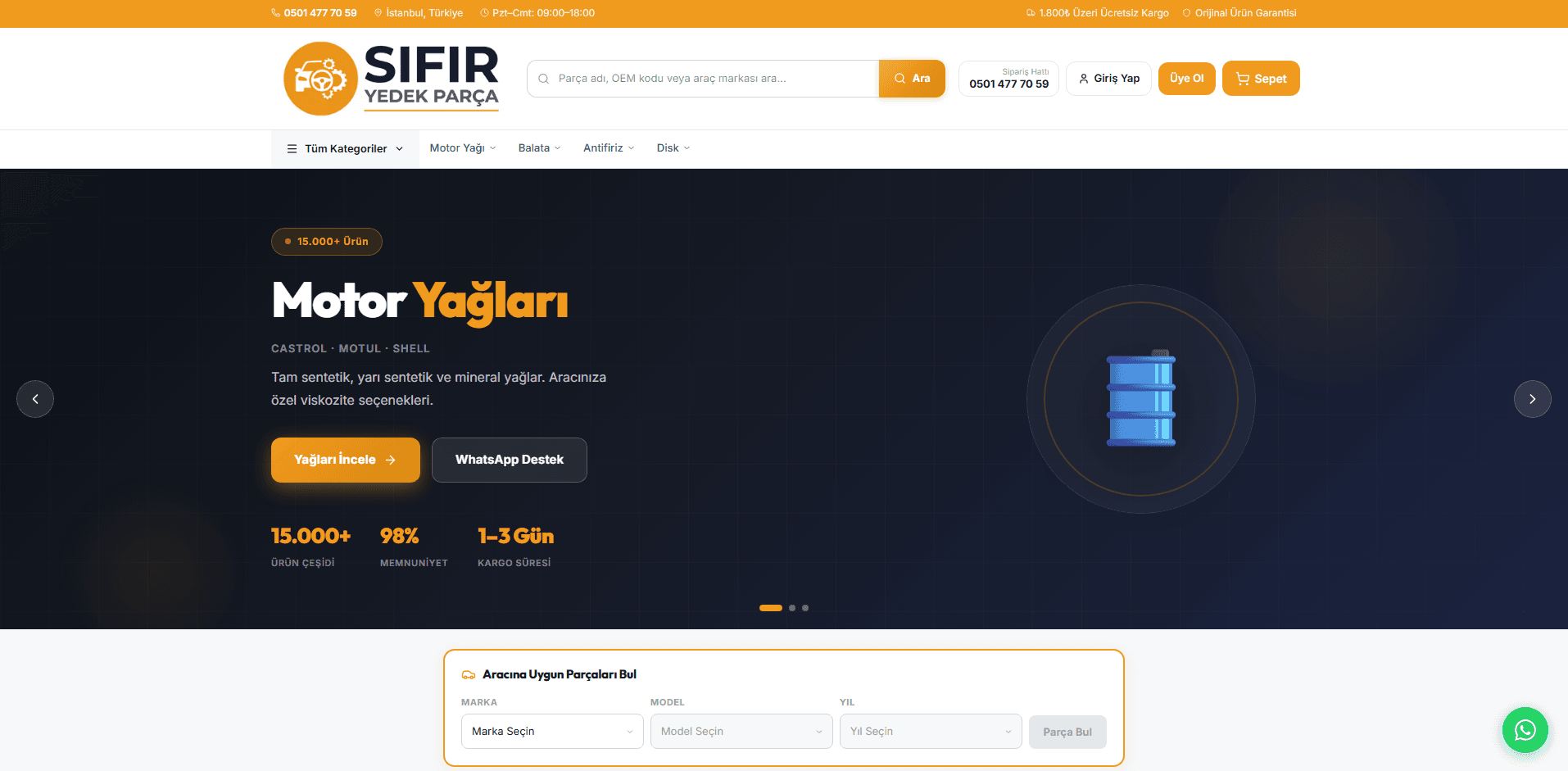
Sıfır Yedek Parça website homepage screenshot
E-Commerce / Automotive2025

Sıfır Yedek Parça

High-speed e-commerce infrastructure for a 1.5M-part auto spare parts catalog, with OEM code search and Google Merchant integration.

Challenge
At 1.5 million parts both search and indexing were breaking down. Product pages could not be crawled at that volume and OEM-code search took seconds.
Solution
We built a sharded sitemap architecture (sitemap index plus 100+ child sitemaps), a full-text search index, Product + Offer schema on product pages and a robots.txt policy that protects crawl budget. A separate read-only catalog API and /llm markdown endpoints were added for AI agents.
Result
The entire catalog became discoverable through sitemaps, the Google Merchant feed runs without interruption, and the catalog is structurally readable by AI assistants.
  • Next.js
  • TypeScript
  • PostgreSQL
  • Tailwind CSS
  • Vercel
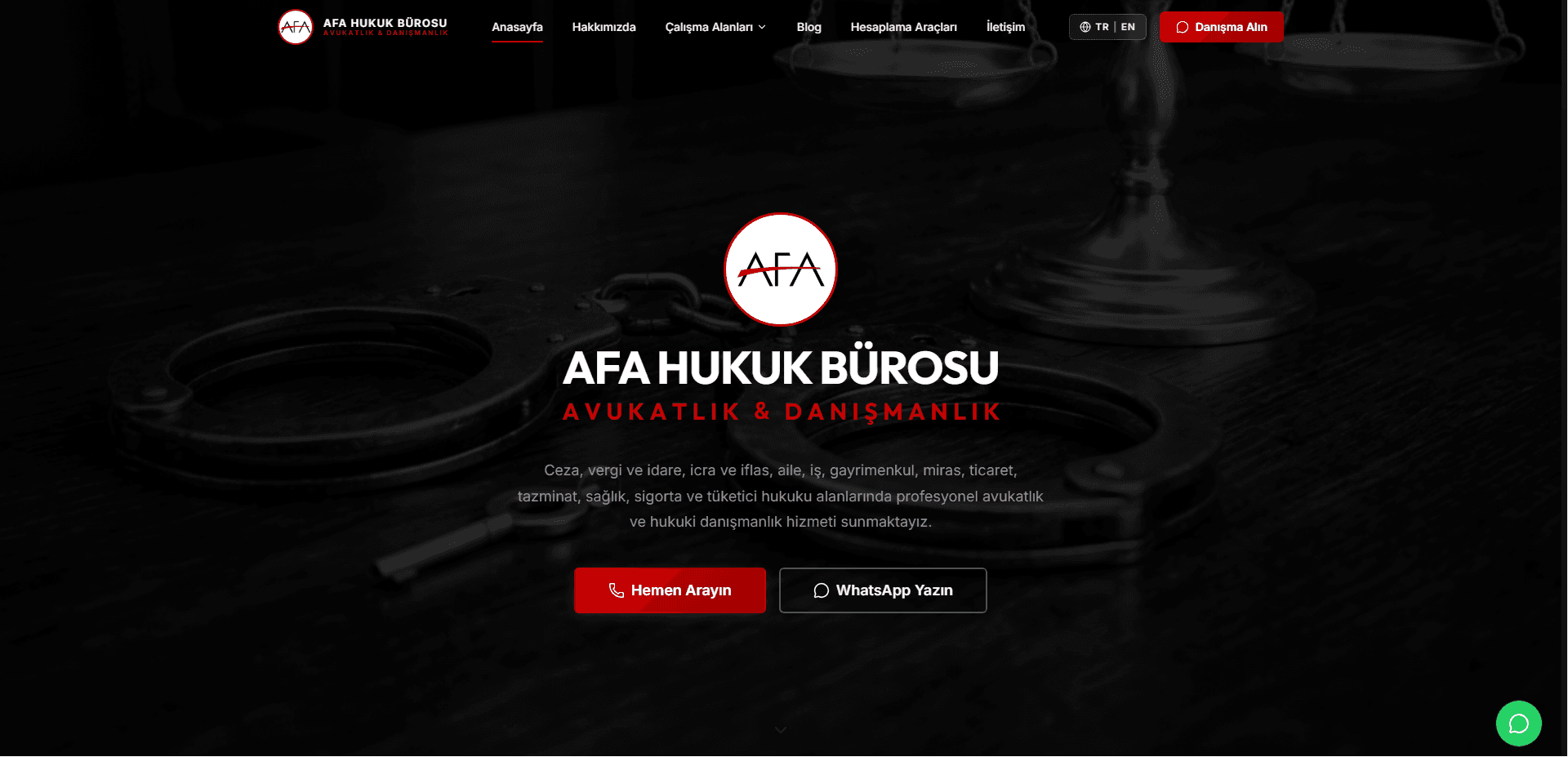
Afa Hukuk Bürosu website homepage screenshot
Corporate / Law Firm2025

Afa Hukuk Bürosu

Prestigious corporate identity, mobile-first layout and technically SEO-compliant content architecture for a law firm.

Challenge
In legal services trust is established by the first visual impression, but heavy designs loaded slowly on mobile and prospective clients bounced.
Solution
We applied server-side rendering, critical CSS separation and image optimization to keep mobile performance without diluting the visual weight. Practice areas were split into separate URLs so each specialty became independently searchable.
Result
A mobile-friendly, fast-loading corporate site went live with every practice area independently indexable.
  • Next.js
  • React
  • Tailwind CSS
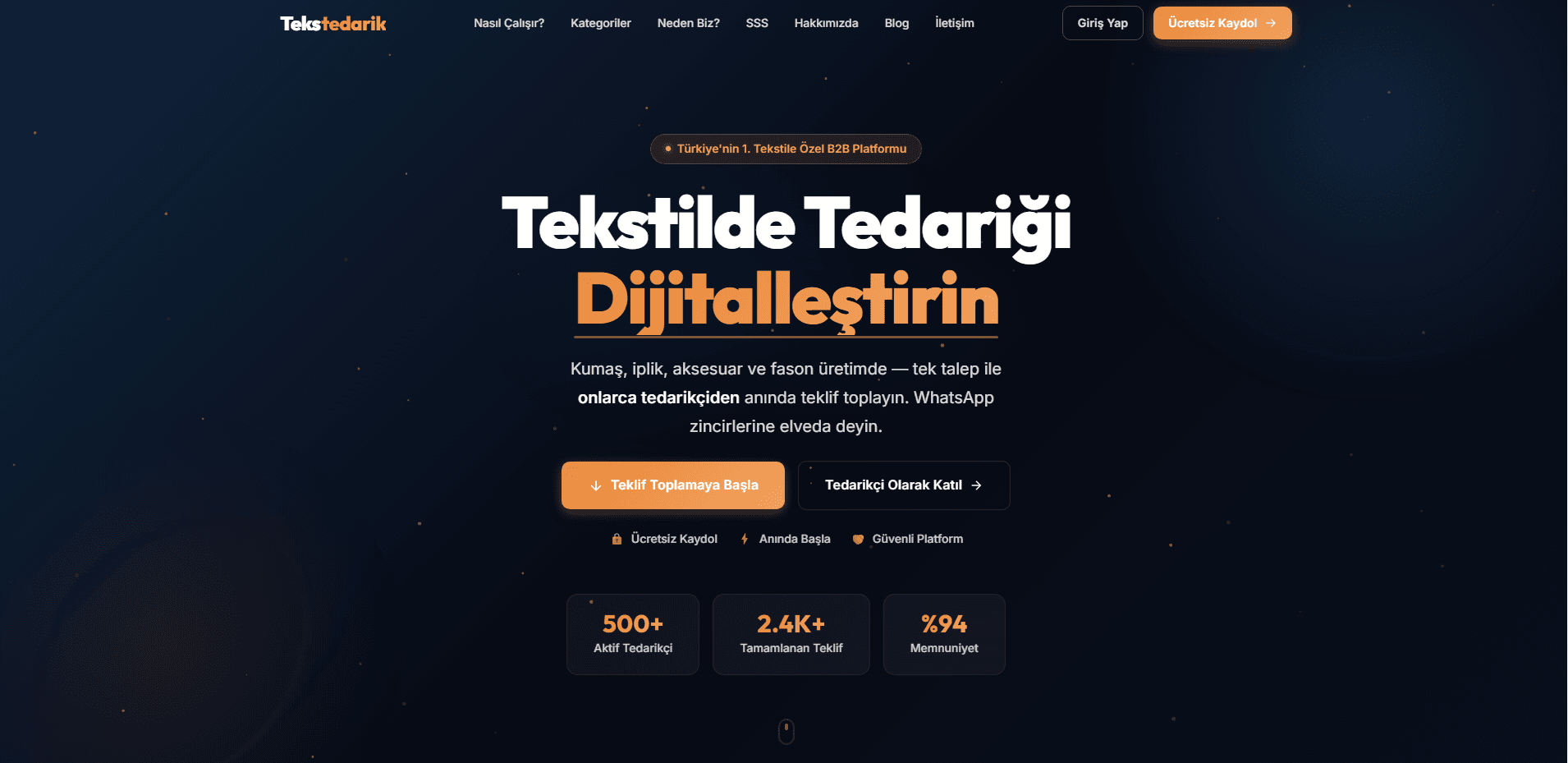
Tek Stedarik website homepage screenshot
Corporate / B2B Supply2025

Tek Stedarik

Modern, fast and reliable B2B corporate web infrastructure for supply chain management.

Challenge
In B2B supply the decision maker wants to see capacity and product range clearly before requesting a quote; a scattered catalog stalled the buying process.
Solution
We restructured product and service categories into a clear information architecture, reduced the quote request flow to a single step and surfaced corporate references.
Result
The path to a quote request shortened and the catalog became crawlable by category.
  • Next.js
  • TypeScript
  • Tailwind CSS
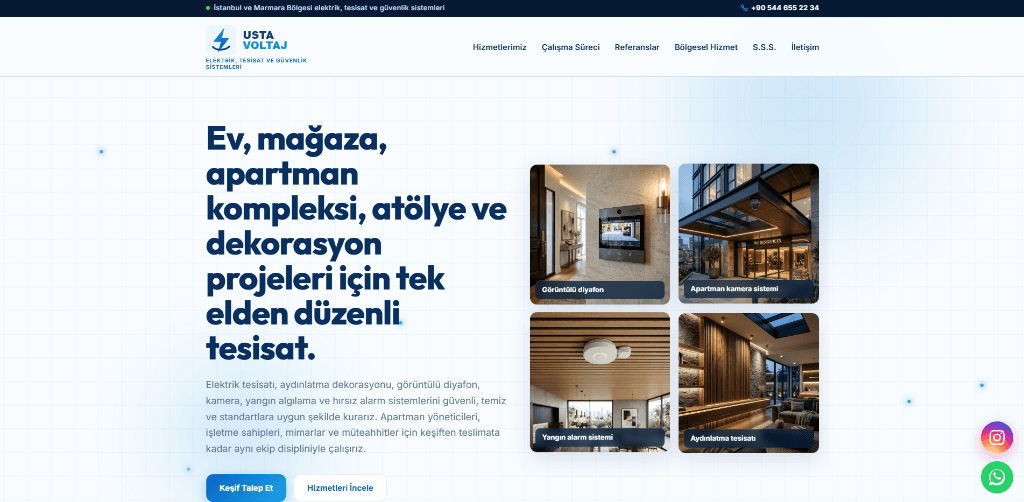
Usta Voltaj website homepage screenshot
Corporate / Electrical & Contracting2025

Usta Voltaj

Modern corporate web design, mobile-friendly interface and service-oriented user experience for an electrical contracting firm.

Challenge
For a field-service company the visitor needs exactly two things: find the right service and call immediately. The old site made both harder than necessary.
Solution
We split services into scannable cards, made phone and WhatsApp actions reachable at every screen size, and stated service areas explicitly in the content.
Result
Visitors reach contact from a service in two taps, and service areas are stated explicitly in the content for local search.
  • Next.js
  • React
  • Tailwind CSS

What do all of these builds have in common?

The same four decisions repeat across every project. They are delivery standards, not preferences, and they are what an outsourced build has to guarantee if you are going to trust it from another country:

  • Server-side rendering. Content arrives inside the HTML, so Googlebot and the AI crawlers that do not execute JavaScript read the page as it is.
  • No bought themes. Every interface was drawn from scratch; none is a purchased template with the colours changed.
  • Technical SEO is part of delivery. Schema markup, sitemaps, robots and canonicals ship with the build instead of being sold back to you later.
  • The code becomes yours. The repository transfers at delivery. There is no licence key, no hosted lock-in and no monthly fee for continuing to use what you paid for.

What these standards cost is set out package by package on the pricing page.

Where to go next

  • Services — what we build and how a remote engagement runs from brief to handover.
  • Pricing — the three packages in US dollars, and what drives the number.
  • Contact — what to include in an enquiry, and how fast you get an answer.
  • About Obelisx — the team, the location and the timezone.
  • Türkçe — Portföy — the Turkish version of this page, with the full case studies.